Why I Traveled to Philadelphia for a Photography Shoot
I spend most of my time shooting in Charleston and the DMV. Those are my home bases. I know the light, I know the locations, I know exactly where to stand at any given hour to get a good frame. That familiarity is an asset for client work but it can become a creative ceiling if you let it. Philadelphia broke that ceiling for me.
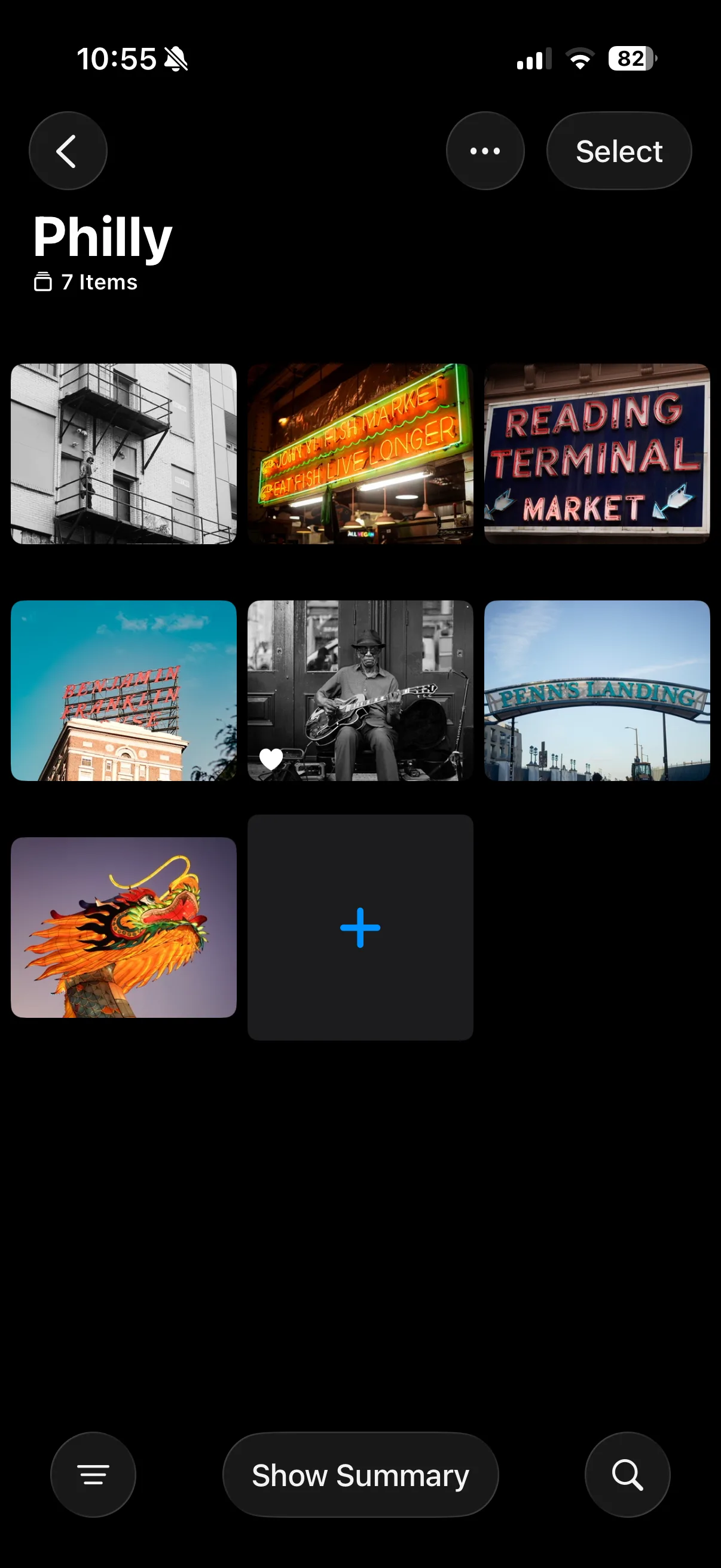
On July 18, 2025, I spent a day walking Philadelphia with my camera. No client. No shot list. No deadline. Just me, my Tamron 28-75mm, and a city I had never photographed before. I started at Reading Terminal Market, cut through Chinatown, walked down to Penn's Landing, and shot everything that caught my eye along the way. Neon signs. Dragon statues. Vintage storefronts. Black and white street scenes that felt like a different decade.
This post is a breakdown of those locations, why Philadelphia is worth the trip for any photographer working in the mid-Atlantic, and how travel shoots make you sharper when you come back to your regular work. If you are looking for a photographer who brings that kind of range to your session, check out my DMV portrait photography page.
What Makes Reading Terminal Market a Great Photography Location?
Reading Terminal Market has been open since 1893. It is one of the oldest continuously operating public markets in the country. From a photography standpoint, it gives you everything in one building: neon signage, food stalls with steam and color, natural light pouring through high windows, and a constant flow of people moving through narrow aisles.
The neon sign out front is the first thing I shot. That classic "Reading Terminal Market" lettering against the building facade. Neon reads well in both color and black and white, but in color it pops against the muted brick and concrete of the surrounding architecture. I shot it wide to include the building context and then tight to isolate just the lettering. Both worked.
Inside the market, the challenge is light. You go from bright window light on one side to dim, warm bulb light at the interior stalls. The color temperature shifts every ten feet. I kept my white balance on auto and shot RAW so I could correct each frame individually. For compositions, I looked for repetition: rows of hanging meats, stacks of produce, lines of stools at counter-service spots. Markets are full of patterns if you slow down and look for them.
The energy inside Reading Terminal is what sells it as a photography location. Vendors calling out orders. Families navigating the aisles with trays of food. A guy slicing meat with practiced precision. You are not staging anything. You are catching moments that happen on their own, and that is where street photography lives.
What Should You Photograph in Philadelphia's Chinatown and Penn's Landing?
Philadelphia's Chinatown is small but visually dense. The Friendship Gate at 10th and Arch is the obvious starting point. It is a 40-foot traditional Chinese arch that photographs well from either side. I shot it straight on and then at an angle with the street receding behind it. The dragon details on the gate give you texture for tight crops.
Past the gate, the streets are lined with restaurants, tea shops, and grocery stores with signage in both English and Chinese characters. The dragon statue near the gate is a strong subject on its own. I shot it at a low angle to make it feel larger than life, which plays into the mythology behind it. Look for the contrast between traditional cultural elements and the modern city buildings behind them. That visual tension is what makes Chinatown interesting to photograph.
From Chinatown I walked east to Penn's Landing on the Delaware River waterfront. The vibe shifts completely. Open sky, wide walkways, the Ben Franklin Bridge in the background. The Penn's Landing sign itself makes a good subject, especially with the water and bridge behind it. I used a wider focal length here because the space demanded it. The waterfront is about big, open compositions rather than the tight, layered frames you get in Chinatown and the market.
What I liked about this route is the variety within a short walking distance. Market to Chinatown to waterfront in about forty minutes on foot. Three completely different visual environments. That kind of density is rare and it is what makes Philadelphia a strong city for a street photography day trip from the DMV or the mid-Atlantic.
When Should You Shoot Street Photography in Black and White vs Color?
I shot about half of my Philadelphia frames in black and white. Not in-camera, but in post. I always shoot color RAW files and convert selectively because you cannot go from black and white back to color, but you can always strip color out later. Shooting RAW gives you both options.
Here is when I choose black and white. When the image is about contrast, texture, and shape rather than color. A silhouette of a person walking past a bright window. The texture of a weathered brick wall. The hard shadow of a fire escape on concrete. These images do not need color. Color would actually distract from what makes them work.
The vintage signage I found in Philadelphia was a perfect example. Old hand-painted signs on brick buildings, faded lettering, retro storefronts. In color these looked muted and slightly washed out. In black and white they looked timeless. The conversion stripped away the faded paint colors and left just the form, the lettering, and the texture of the surface. That is the strength of black and white: it reduces an image to its essential elements.
Color wins when the subject depends on color to tell its story. The neon Reading Terminal sign needs its red and yellow glow. The Chinatown gate needs its gold and green paint. A market stall piled with bright produce needs those oranges and reds. If the color is the point, keep it. If the color is just there, take it away and see if the image gets stronger. Most of the time it does.
For my regular portrait and event work in Charleston, I primarily deliver in color because clients expect it. But I always include a few black and white edits in every gallery because certain frames just hit harder without color. My Smithsonian portrait shoot is a good example of mixing both in a single gallery.
Pro Tip: Shoot First, Edit for Black and White Later
Never set your camera to monochrome mode for street photography. You are throwing away color data permanently. Instead, shoot in color RAW and apply a black and white preset in Lightroom or Capture One during editing. This lets you compare both versions side by side and choose the stronger one. Some cameras let you set a monochrome picture profile that shows black and white on the LCD while still recording a color RAW file. That is the best of both worlds: you see the black and white composition in real time without losing the color option.
How Do Travel Shoots Make You a Better Photographer?
When you shoot in the same city every week, you develop habits. You know which angles work at which locations. You know the light at every hour. That efficiency is great for client work but it can make your creative instincts lazy. You stop seeing new compositions because you already know what works.
Travel breaks that pattern. In Philadelphia I had no pre-scouted locations. I did not know where the sun would hit at 2pm or which alley had the best wall texture. I had to rely on my eye and my instincts in real time. That forced me to slow down, actually look at what was in front of me, and make decisions about composition, light, and framing without falling back on muscle memory.
The other benefit is portfolio diversity. If every image in your portfolio is from the same three locations in one city, potential clients might wonder if you can deliver outside your comfort zone. A Philadelphia street series, a DC museum portrait session, a Charleston beach shoot. That range tells clients you can adapt to any environment and still deliver strong work. It shows versatility, and versatility gets you booked.
I try to do at least one travel shoot every couple of months. It does not have to be a cross-country trip. Philadelphia is a few hours from the DMV. Savannah is a couple hours from Charleston. Even a new neighborhood in your own city can shake up your perspective if you approach it with fresh eyes. The point is to put yourself somewhere unfamiliar and make it work.
If you are a photographer reading this, take the trip. If you are a client, know that the photographer you hire should be someone who shoots beyond their backyard. It means they can handle whatever your session throws at them.
What Gear Do You Need for a Street Photography Day Trip?
I traveled light for Philadelphia. One camera body, one lens, one battery, two memory cards. That is it. Street photography is about moving freely and reacting quickly. A heavy bag slows you down and makes you hesitant to keep walking when your shoulder starts hurting at hour three.
My lens choice was the Tamron 28-75mm f/2.8. The same lens I use for most of my portrait work. At 28mm it is wide enough for architecture and environmental shots. At 75mm it is tight enough to isolate details and compress street scenes. The f/2.8 aperture lets you shoot in dim alleys and indoor markets without pushing your ISO to noisy levels.
I did not bring a flash. Street photography should look like available light. If a scene is too dark for a clean exposure, I either wait for better light, push the ISO and deal with the grain, or move on. Grain in street photography is not a flaw. It adds texture and grit that fits the genre. Some of my favorite black and white frames from Philadelphia have visible grain and they look better for it.
I wore a cross-body camera strap that lets me keep the camera at hip level when I am not shooting. It is faster to raise to your eye than a neck strap and more comfortable over a full day of walking. Small details like strap choice, comfortable shoes, and a fully charged phone for navigation make a bigger difference than any piece of camera gear when you are on your feet for six hours.
What Other Philadelphia Locations Are Worth Photographing?
I focused on Reading Terminal, Chinatown, and Penn's Landing for this trip but Philadelphia has a deep bench of photography locations. Here are a few I plan to hit on the next visit.
South Street is covered in street art, murals, and vintage storefronts. The Magic Gardens mosaic installation alone could fill a memory card. It is a strong location for editorial-style portraits with colorful, textured backgrounds.
Rittenhouse Square is a pocket of green in Center City with tree-lined paths and natural light that works well for portrait sessions. The surrounding brownstones give you that classic East Coast urban backdrop. If I were doing a client portrait shoot in Philly, this is where I would start.
Elfreth's Alley claims to be the oldest residential street in America. Narrow cobblestone lane with colonial-era rowhouses. It photographs well in any light and gives you that historical texture that modern cities rarely offer.
The Schuylkill River Trail gives you waterfront views, the city skyline, and wide open light for golden hour work. Different feel than Penn's Landing but equally usable for both street and portrait photography.
Philadelphia has enough variety that you could spend a week shooting and not repeat a location. For a day trip from the DMV, it is one of the best options you have within driving distance.
Frequently Asked Questions
What are the best Philadelphia locations for photography?
Reading Terminal Market for neon signs and indoor market scenes. Chinatown for the Friendship Gate and dragon statues. Penn's Landing for waterfront and skyline shots. South Street for street art and vintage signage. Rittenhouse Square for natural light portraits. Each neighborhood offers a different look, so the best location depends on your style of shoot.
What are the best tips for street photography in Philadelphia?
Shoot with a versatile lens like a 28-75mm so you can go wide for architecture and tight for details. Walk slowly and look for interesting light, textures, and signage rather than chasing subjects. Shoot in RAW so you can decide on black and white versus color in post. Visit markets and neighborhoods during off-peak hours for fewer crowds. Respect people's space.
Do you need a permit for street photography in Philadelphia?
You do not need a permit for personal or editorial street photography in public spaces in Philadelphia. The First Amendment protects photography in public areas including sidewalks, parks, and public markets. Commercial shoots with lighting equipment, models, or blocked foot traffic may require a permit from the City of Philadelphia's Office of Special Events.
Should I shoot street photography in black and white or color?
It depends on the scene. Black and white works best when the image relies on contrast, texture, and shapes rather than color. Color works better when the subject is defined by its color, like neon signs or painted murals. Shoot in RAW and decide in post-processing so you have both options available for every frame.
How does travel photography help you grow as a photographer?
Travel photography forces you out of familiar locations and lighting conditions. You adapt to new environments quickly, find compositions in unfamiliar places, and work with whatever light is available. It builds versatility, expands your portfolio, and shows clients you can deliver strong work anywhere. It also keeps your creative eye fresh.
Book a Portrait or Street Photography Session
I shoot portrait sessions in Charleston, the DMV, and beyond. Whether you want an urban street-style session, a location-based portrait shoot, or event coverage in a new city, I bring the same eye and the same quality regardless of zip code. Check out my portfolio to see the range of my work, or reach out to book your session.
If you are in the DC, Maryland, or Virginia area, visit my DMV portrait photography page for packages and availability. Travel sessions are available by request for locations like Philadelphia, New York, and anywhere you want great photos.