Why Black and White Photography Still Matters
There is something about a black and white portrait that stops you in your tracks. In a world saturated with color, vibrant filters, and neon overlays, monochrome photography strips everything back to what matters most: light, shadow, emotion, and the human form. It forces you to see differently, and as a photographer, it forces me to light differently, compose differently, and connect with my subjects on a deeper level.
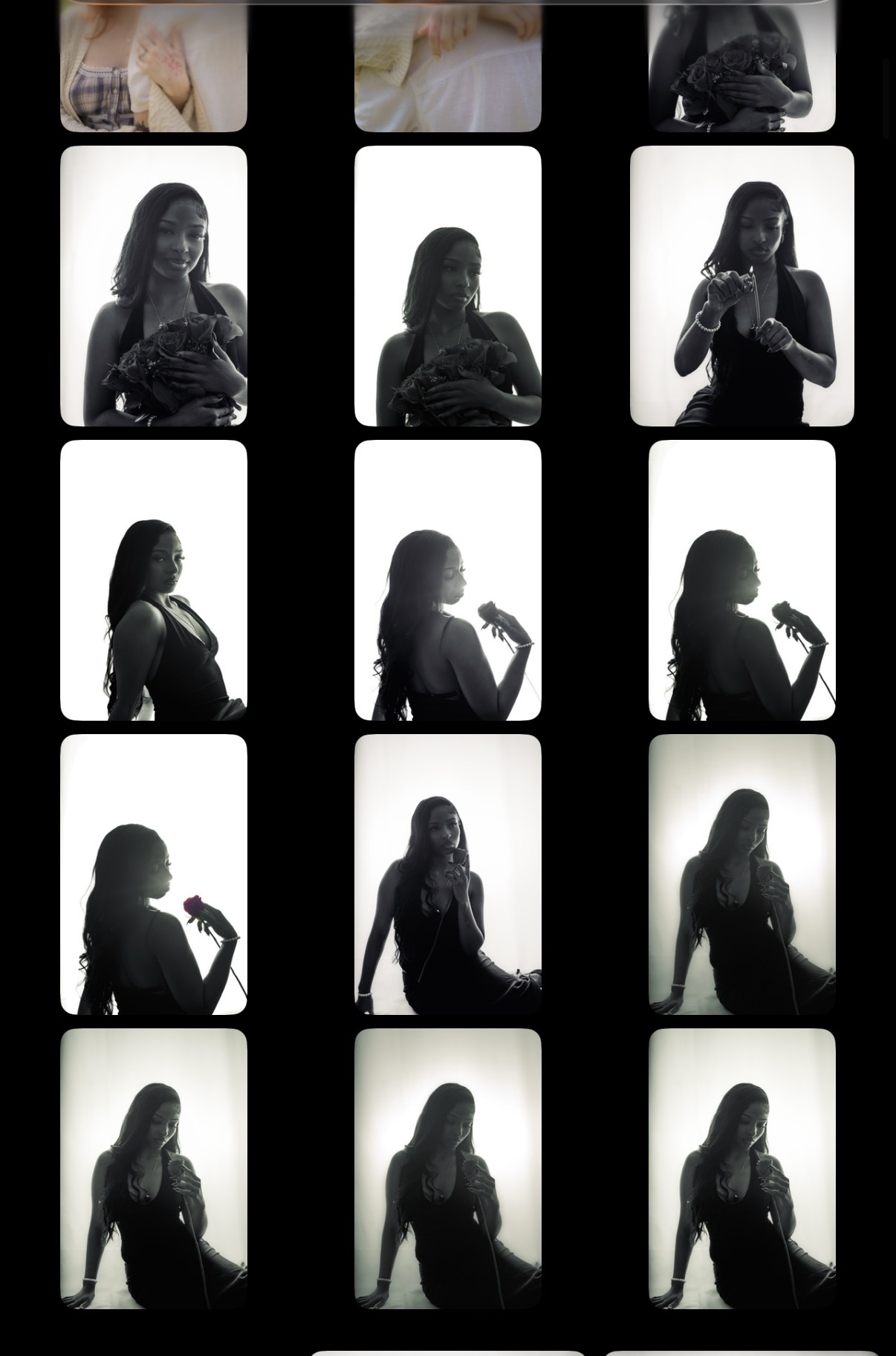
I recently had the opportunity to shoot a studio black and white portrait session here in Charleston, and the results reminded me exactly why I fell in love with this style of photography. The session featured dramatic backlighting, silhouette work, dark roses as props, and a mood that was equal parts editorial and fine art. Every frame felt intentional. Every shadow told a story.
Whether you are a fellow photographer looking to refine your creative portrait photography approach or someone considering booking a session like this, I want to walk you through what goes into creating these kinds of images -- from the lighting philosophy to the final frame.
Studio Lighting Techniques for Dramatic Portraits
The backbone of any powerful black and white portrait is the lighting. In color photography, you can lean on wardrobe, background hues, and skin tones to create visual interest. In monochrome, all you have is the interplay between light and dark. That constraint is actually what makes it so powerful -- and so demanding of precise lighting control.
For this particular fine art portrait session, I used a combination of three core studio lighting techniques that I come back to again and again when shooting dramatic black and white work.
1. Backlighting for Silhouettes
The signature look of this session came from placing a strong light source directly behind the subject. By positioning a strobe with a large softbox behind and slightly above, I was able to create those striking silhouette portraits where the subject becomes a dark, defined shape against a wash of bright light. The key is controlling the spill -- you want enough light to separate the subject from the background, but not so much that it wraps around and fills in the shadows on the front of the face. For this shoot, I flagged the light on both sides to keep it narrow and directional.
2. Rim Lighting for Definition
Rim light is what gives a silhouette its edge. Without it, a backlit portrait can look flat -- just a dark blob against a bright background. By adjusting the angle and intensity of the backlight, I was able to create a thin line of light tracing the outline of the subject's hair, shoulders, and profile. This is what separates a professional studio portrait from a snapshot taken against a window. The rim light adds dimension and gives the viewer's eye something to follow along the contour of the body.
3. Controlled Fill for Mood
In most portrait work, you want some fill light to soften shadows and ensure the subject's features are visible. In dramatic black and white photography, though, I intentionally reduce or eliminate fill light. For this session, I used a very subtle silver reflector at a low angle to bounce just enough light back into the subject's face to reveal expression without destroying the mood. The goal is not to illuminate everything -- it is to reveal just enough to make the viewer lean in and look closer. That tension between what you see and what stays hidden is what makes fine art portraiture compelling.
Working with Props to Add Emotion
Props in creative portrait photography should never feel like an afterthought. They need to serve the story. For this session, we chose dark roses -- deep burgundy blooms that would read as near-black in the final monochrome images. Held close to the face, draped across the shoulders, or clutched tightly in the hands, the roses introduced texture and symbolism without pulling focus from the subject herself.
Roses have a natural duality that works perfectly in black and white. They are beautiful and delicate, but the thorns add an edge. In a session that was already leaning into contrast and drama, that tension between softness and sharpness gave us an additional emotional layer to work with. The petals caught the rim light beautifully, creating these tiny highlights against the dark silhouette that added richness to every composition.
Beyond flowers, fabric is another prop I frequently use in studio work. A flowing sheer fabric can add movement to a still frame, catch light in unexpected ways, and give the subject something to interact with physically. If you are planning a creative portrait session, think about props that have meaning to you or that complement the mood you want to create. I always discuss prop ideas during our pre-session consultation so everything is intentional.
When Black and White is Better Than Color
Not every image needs to be black and white, and not every session calls for it. But there are specific scenarios where stripping away color genuinely elevates the photograph. Here is when I reach for monochrome:
- When the emotion is the subject -- If the story is about vulnerability, strength, introspection, or raw feeling, color can be distracting. Black and white puts the focus squarely on expression and body language.
- When the lighting is dramatic -- High-contrast lighting with deep shadows and bright highlights translates powerfully to monochrome. The tonal range in B&W creates a richness that color sometimes flattens.
- When simplicity serves the image -- Busy backgrounds, clashing colors in wardrobe, or distracting color casts all disappear in black and white. It simplifies the frame and directs attention where it belongs.
- When you want timelessness -- Color dates a photograph. Fashion, trends, and color palettes shift constantly. A well-executed black and white portrait could have been taken yesterday or fifty years ago, and that timeless quality gives it staying power.
- When skin texture and form matter -- Black and white reveals the architecture of the face and body in a way color does not. Every line, every curve, every shadow across a cheekbone becomes a design element rather than just a feature.
During the editing process for this session, I converted every image to black and white before making any other adjustments. This let me evaluate each frame purely on its tonal qualities and composition. Some images that looked average in color became extraordinary in monochrome, and that is the power of this approach. If you want to see more examples of how I work with different styles, check out my full portfolio.
How to Prepare for a Creative Studio Session
If you are considering booking a fine art portrait session or a dramatic black and white shoot, preparation makes a meaningful difference in the final results. Here is what I recommend to every client before they step into the studio:
Wardrobe Choices
Solid colors work best for B&W. Avoid busy patterns that create visual noise. Think about texture instead -- leather, lace, silk, and knits all photograph differently in monochrome and add visual interest without competing for attention.
Mood Board Together
Before the session, we will build a shared mood board. Send me images that inspire you -- from Pinterest, Instagram, magazines, anywhere. This helps me understand your vision and plan the lighting and set design accordingly.
Skin and Makeup
Moisturized skin catches light beautifully. For B&W, makeup should be slightly more defined than you would normally wear, as monochrome conversion can soften features. Bold lip colors translate to striking dark tones.
Bring Your Playlist
Music transforms the energy of a studio session. Bring a playlist that puts you in the mood you want to project. Whether it is moody R&B, classical, or something completely unexpected, sound shapes expression.
The most important thing you can bring to a creative portrait session is trust. Studio work is collaborative, and the best images happen when there is a genuine connection between photographer and subject. I will guide you through every pose and expression, but the magic comes from you being present and willing to experiment. If you have never done a session like this before, that is completely fine -- I work with first-timers regularly, and the experience is designed to be comfortable and empowering.
I shoot studio portrait sessions in both Charleston, SC and the DMV area. Whether you are local or traveling to either location, I will handle the studio booking and set design so all you need to worry about is showing up ready to create something extraordinary.
For more information about what to expect, session lengths, and pricing, visit my FAQ page or check out my photography pricing guide.