In this guide
Why I Spent a Week in Chicago
Charleston is a low, horizontal city. Live oaks, single-family porches, water at nearly every horizon line. Chicago is the opposite of everything I normally shoot, and that was the entire point of the trip. I spent a week walking the Loop and the museum campus with a camera, no client and no agenda beyond seeing what a dense, vertical, layered city does to the way I frame a shot.
I hit the Art Institute, Millennium Park, and the historic core of the Loop over several days, mostly on foot. Chicago rewards that. Everything worth photographing downtown sits within a twenty or thirty minute walk of everything else, and the city changes character block to block. Glass towers give way to century-old stone facades give way to elevated steel tracks, sometimes within the same block.
Cloud Gate and Millennium Park
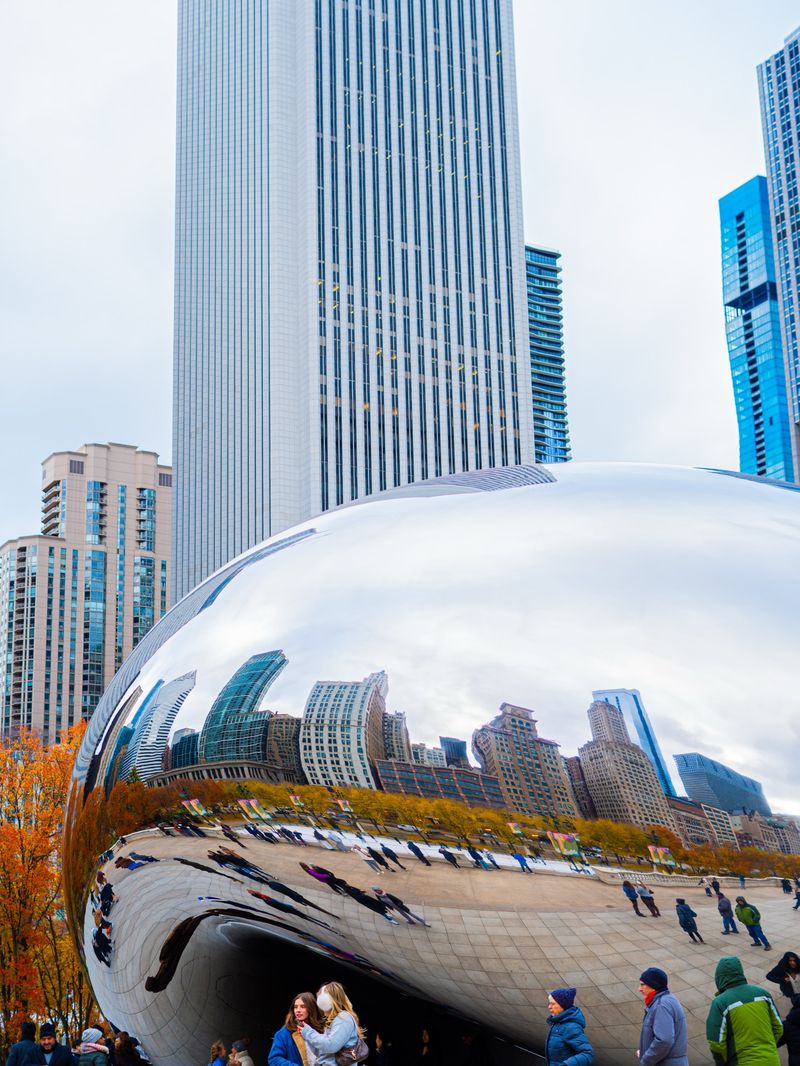
Cloud Gate, known to almost everyone as the Bean, is one of the most photographed sculptures in the country, which makes it a genuinely hard subject to shoot in a way that feels like your own. Everybody has the same angle from the plaza looking up at the polished steel with the skyline reflected in the curve. I shot that angle too, because it works, but I spent more time trying to find something less obvious.
What made my strongest frame was getting in close underneath the arch, low enough that the reflection of the surrounding towers took over the entire bottom half of the image, distorted into that funhouse-mirror curve the sculpture is known for. The people in the reflection become part of the composition without you ever aiming the camera at them directly. That indirect portrait quality is what separates a good Cloud Gate shot from the thousand identical tourist photos taken there every day.
Millennium Park in late November had a seasonal layer to it too. Autumn leaves still holding color against the steel and glass, a life-size Grinch fundraiser bucket collection happening near the planters, ice rink lights starting to glow as the sun dropped. A location like this changes completely depending on when you show up, and showing up during a specific week or season instead of generically "sometime" is worth planning around if you can.
Inside the Art Institute
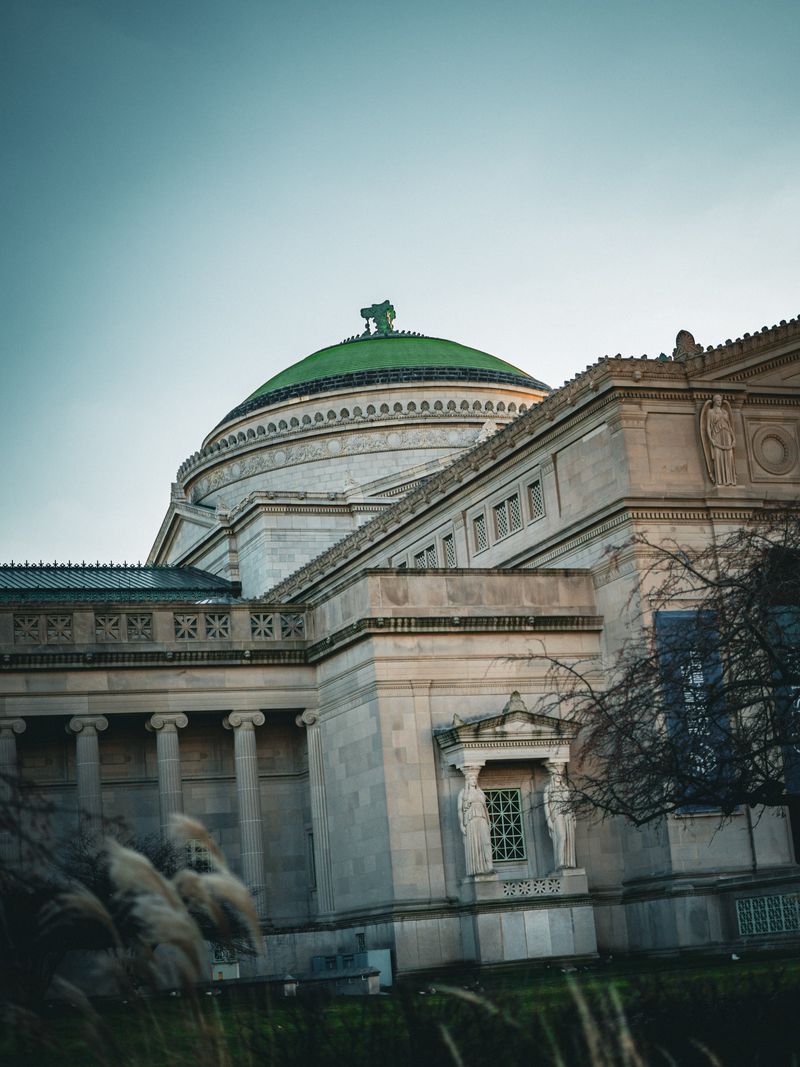
The Art Institute of Chicago is a full day on its own if you let it be. I went in expecting to photograph the building and came out having spent most of my time on a single stained glass installation. A Tiffany-designed window, a full story tall, built from hundreds of individual glass pieces that catch daylight differently minute to minute. I shot it wide to get the full arch and again tight to isolate the waterfall panel at its center. No two frames of that window looked the same because the light behind it kept shifting.
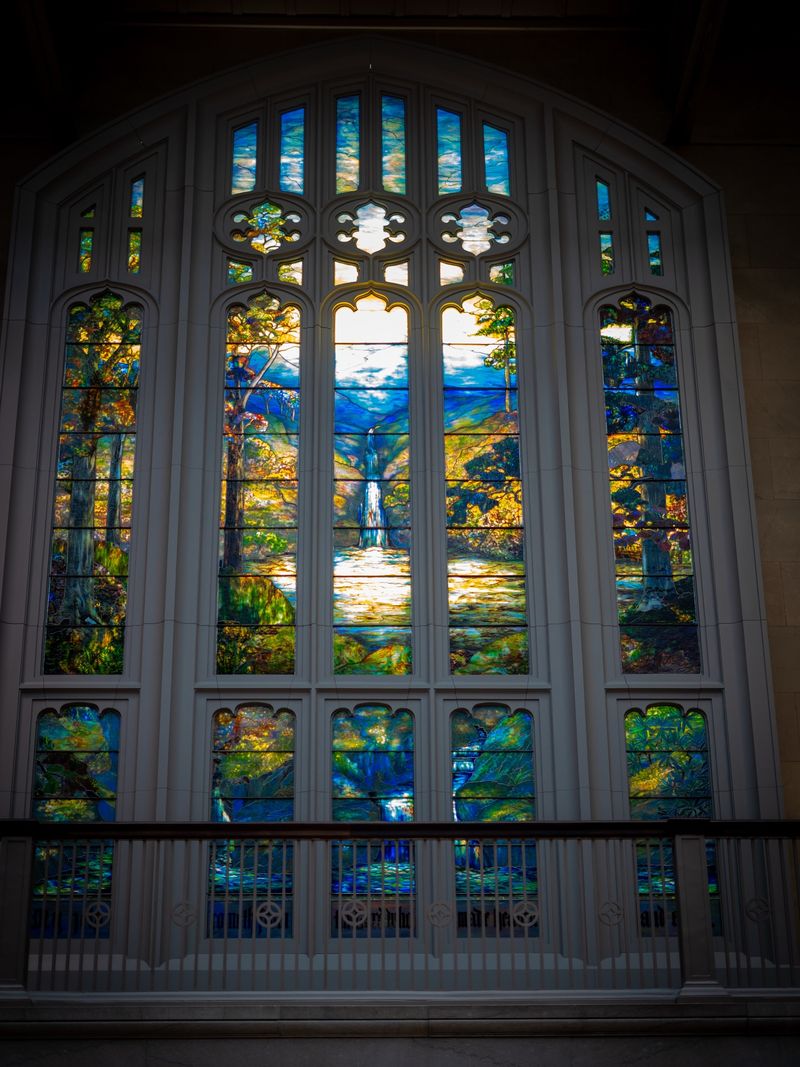
Shooting inside a museum is a different discipline than shooting outdoors. No flash, no tripod in most galleries, and you are working entirely with whatever ambient light the space gives you. That meant pushing ISO higher than I normally would for a landscape shot and accepting some grain in exchange for a natural exposure. Museums also move in waves of foot traffic, so patience matters. I waited out a tour group in front of the window rather than shooting around them, and the empty gallery I got a few minutes later was worth the wait.
The Loop and the L
Chicago's elevated train, universally called the L, is the shot every visiting photographer wants and almost nobody gets right on the first try. The challenge is timing. You need a train actually in frame, moving through the steel trestle structure, with enough ambient light to expose the scene without the whole thing turning into a silhouette. I got my shot right at dusk, when the building windows behind the tracks had started lighting up but the sky still held enough color to separate the structure from the background.
A city this vertical forces you to look up constantly, and half your best frames come from angles you would never think to check at home.
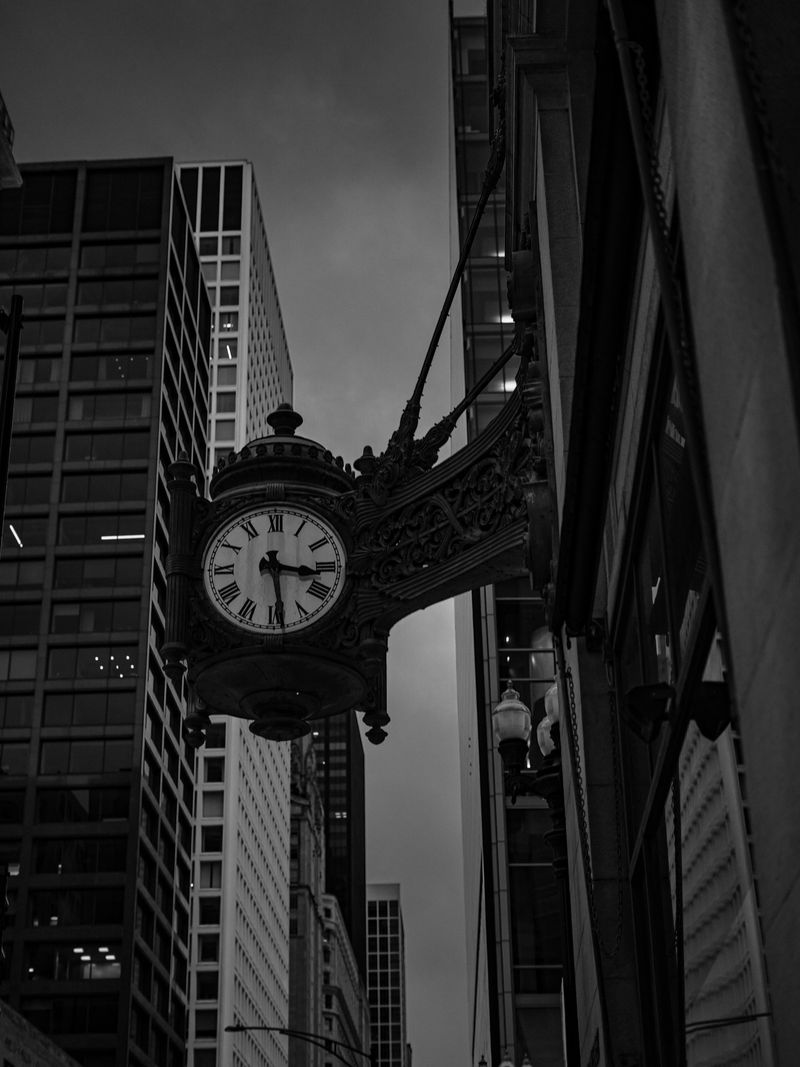
The Loop itself, the historic downtown core the L tracks are named for, is full of details that only show up if you slow down. The Marshall Field's clock on State Street has hung above that corner since 1897, and I shot it in black and white with the modern towers rising behind it out of focus. That contrast between a century-old bronze clock and glass skyscrapers is the whole story of downtown Chicago in a single frame.
Pro Tip: Shoot Transit Infrastructure Like Architecture
Most people ignore the L structure itself and only care about catching a train. The steel trestle work is worth its own frames. Shoot the riveted joints, the diagonal cross-bracing, the way the tracks curve between buildings. Treated like architecture instead of just transit, the L becomes one of the most distinct visual signatures a city can give you, and it photographs completely differently than a subway system that runs underground and out of sight.
Found Moments on the Street
Some of my favorite frames from the week were not planned at all. A street performer in full body paint, posed hanging upside down from an invisible rig near Michigan Avenue, stopped me mid-stride. That kind of moment does not happen on a schedule. You either have your camera ready or you miss it entirely, which is the whole argument for keeping a body and lens on you at all times when you are traveling, even on a day you did not plan to shoot anything specific.
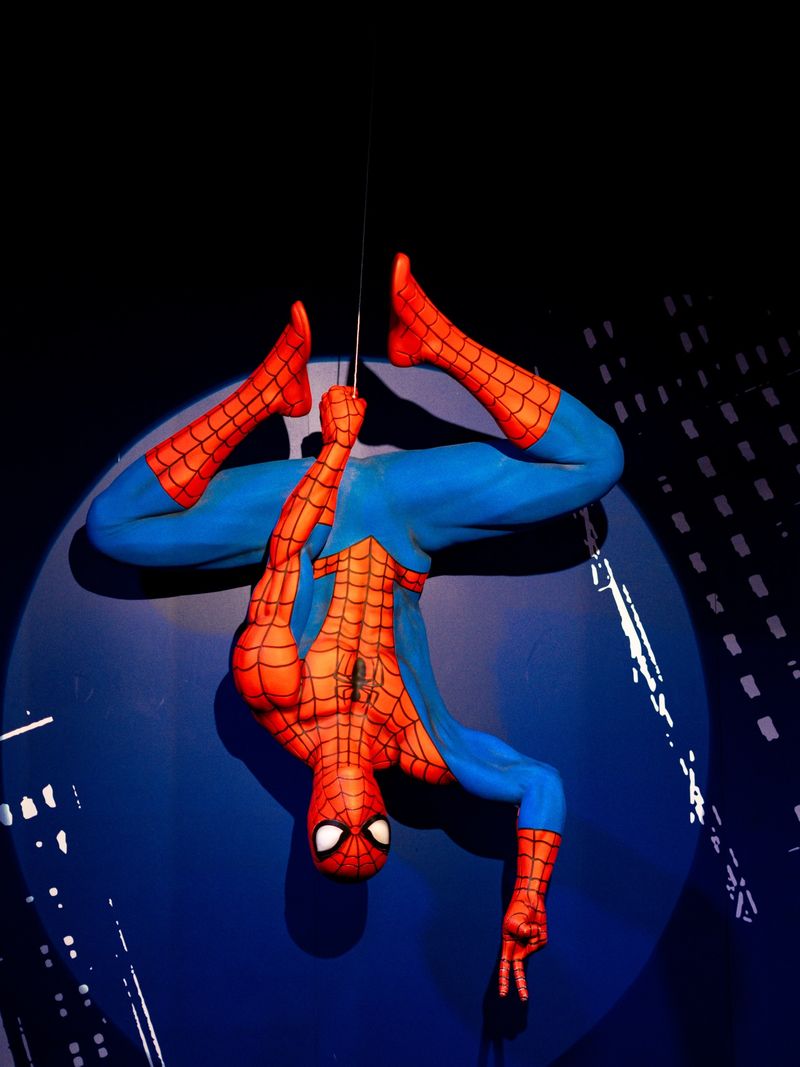
The lesson from moments like that carries directly into event work. Clients hire me for weddings, block parties, and concerts specifically because I catch the thing that happens once and does not repeat. Chicago reminded me how much of that skill is really just readiness. Camera settings dialed in ahead of time, strap on your shoulder instead of in a bag, eyes up instead of staring at a phone between planned shots.
What a Dense City Teaches You
Shooting in Chicago after mostly shooting in Charleston retrained how I think about layers. Charleston compositions tend to be foreground, subject, background, three clean planes. Chicago rarely gives you that. A single frame downtown might have a reflection, a building facade, a train, and pedestrians all competing for attention at once. Sorting that visual noise into something that reads clearly, rather than avoiding it, is a skill you only build by shooting somewhere dense and layered.
I came home shooting portraits differently. I catch myself now looking for a reflective surface or a partial frame within a frame, tools I barely used before this trip because Charleston rarely hands them to you the way a glass-and-steel city does constantly. That is the real value of a trip like this, similar to what I found on an Arizona desert trip that pushed my eye in the opposite direction. Different cities and landscapes teach different lessons, and you only learn them by showing up somewhere unfamiliar with a camera and no safety net of scouted locations.
If you are a photographer who has never shot a genuinely dense downtown, put it on your list. And if you are a client looking at photographers, ask what they shoot outside their home market. A photographer who can handle Chicago's chaos and Charleston's quiet with the same eye is one who can handle whatever your event throws at them.
Frequently Asked Questions
What are the best photography locations in Chicago?
Cloud Gate and Millennium Park for the skyline reflection and street life. The Art Institute of Chicago for stained glass, sculpture, and interior architecture. The Loop for the elevated CTA train tracks weaving between historic buildings. The Chicago Theatre marquee at night. The Marshall Field's clock on State Street. Each covers a different look, from reflective sculpture to gritty transit shots to fine art.
Is Cloud Gate hard to photograph well?
It photographs easily but photographing it well takes patience. The Bean is one of the most photographed public artworks in the country, so avoiding a generic shot means working the angles: shoot low from underneath into the reflection, wait for a gap in the crowd, or frame it so the skyline reflection becomes the real subject instead of the sculpture itself. Morning and late afternoon give you softer light on the polished steel than midday.
Can you take professional photos inside the Art Institute of Chicago?
Personal, non-flash photography is allowed in most galleries at the Art Institute of Chicago, including the Tiffany stained glass windows and much of the permanent collection. Some special exhibitions restrict photography entirely, and tripods and flash are not permitted in the main galleries. Commercial or editorial shoots need advance permission from the museum's press and visitor services office.
What is the best time of day to shoot Chicago's elevated train?
Early evening works best, when building windows start lighting up but there is still enough ambient light to expose the train and structure without heavy noise. The Loop's steel trestles create natural framing between buildings, and a train moving through that frame with lit windows and a dusk sky behind it is a stronger shot than the same scene at full midday brightness.
How does travel photography help you grow as a photographer?
Travel photography forces you out of familiar locations and lighting conditions. You adapt to new environments quickly, find compositions in unfamiliar places, and work with whatever light and crowds you are given instead of a scouted, controlled setup. It builds versatility, expands your portfolio, and keeps your eye for composition sharp.
Book a Portrait or Event Session
I shoot portrait and event sessions in Charleston and the DMV, and I bring the same eye for layered composition to every location I travel to. Check out my portfolio to see the range of my work, or book a session.
If you are in the DC, Maryland, or Virginia area, visit my DMV portrait photographer page for packages and availability. Travel sessions are available by request for locations beyond Charleston and the DMV.