In this guide
Why I Shot the Maine Coast
Charleston's coastline is flat, warm, and slow. Maine's is none of those things. I wanted a few days somewhere the water photographs completely differently, rocky instead of sandy, cold instead of warm, working boats instead of pleasure craft. That contrast is exactly what makes a trip like this worth the flight.
I spent my time between Portland and the small harbor towns nearby, camera in hand with no client and no shot list. Lighthouses, working docks, a plein air painter set up at the water's edge, prayer flags strung through someone's backyard trees. Maine does not hand you one obvious hero shot the way some destinations do. It hands you a string of small, specific moments, and the work is in noticing them.
Portland Head Light
Portland Head Light is the most photographed lighthouse in Maine, and after spending an afternoon there I understand exactly why. The white tower, the red-roofed keeper's house, the rock ledges dropping straight into the Atlantic. Every angle from the surrounding park gives you a usable composition, which is rare for a single subject.
I shot it twice, once from a clean angle with no one else in frame and once later in the day with visitors gathered along the fence line. Both versions work for different reasons. The empty frame reads as classic and timeless. The version with people in it tells you this is a living, visited place, not a postcard. If you only have one visit, go early or late to get the quiet version first, then decide if you want the crowd in your second pass.
The Working Harbor
Maine's harbors are working harbors first and tourist attractions second, and that is what makes them worth photographing. Lobster boats with names painted on the transom, buoys in every color stacked on the dock, gear that shows real wear from real use. Nothing is staged for a photo. It is just how the boats look after a season of actual work.
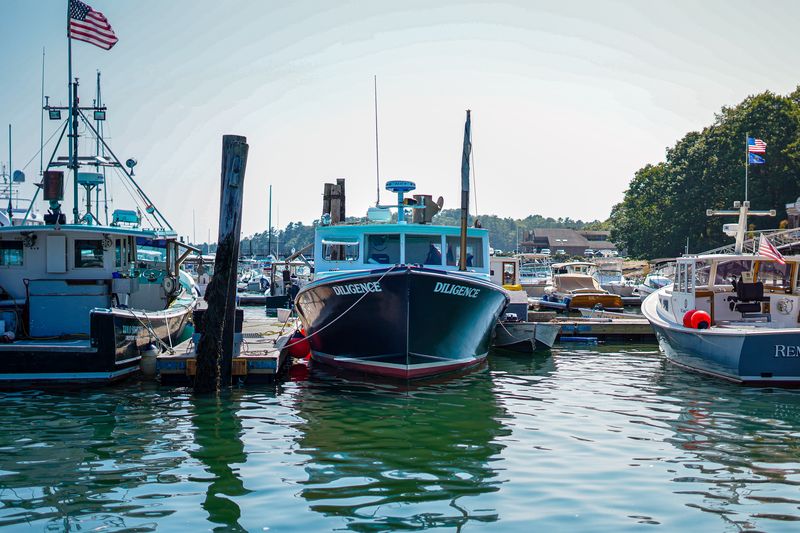
I anchored my shots on one boat at a time rather than trying to capture an entire harbor in a single frame. A boat named Diligence, bow-on with its reflection breaking apart in the wake of the harbor traffic, gave me a strong single subject with everything else in the frame reading as supporting texture rather than clutter. That is the trick with a busy harbor: pick one anchor and let the rest recede.
Nothing in a working harbor is staged for a photo. It just looks that way because the work is real.
Pro Tip: Shoot the Harbor from the Dock, Not Above It
An elevated view of a harbor looks tidy but flat. Get down on the dock itself, close to the water, and shoot at or below the boats' rail height. That low angle compresses the scene, exaggerates the masts and rigging against the sky, and makes even a cluttered harbor feel intentional instead of busy. It is the same principle as shooting a portrait subject at eye level instead of down at them.
Found Moments Along the Way
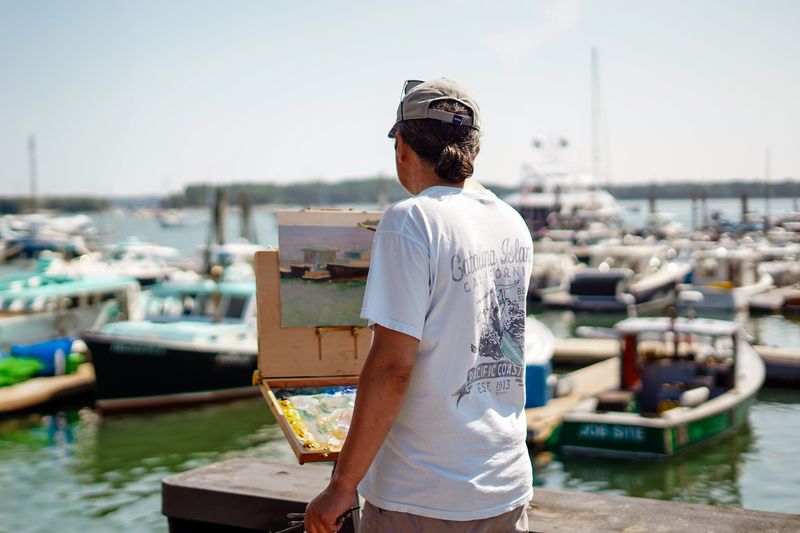
Some of my favorite frames from the trip were not planned at all. A plein air painter set up at the edge of a crowded marina, easel open, working a small canvas in oils while boats rocked behind him. I shot him from behind, letting his painting and the real harbor sit in the same frame so you can compare his interpretation to the actual scene.
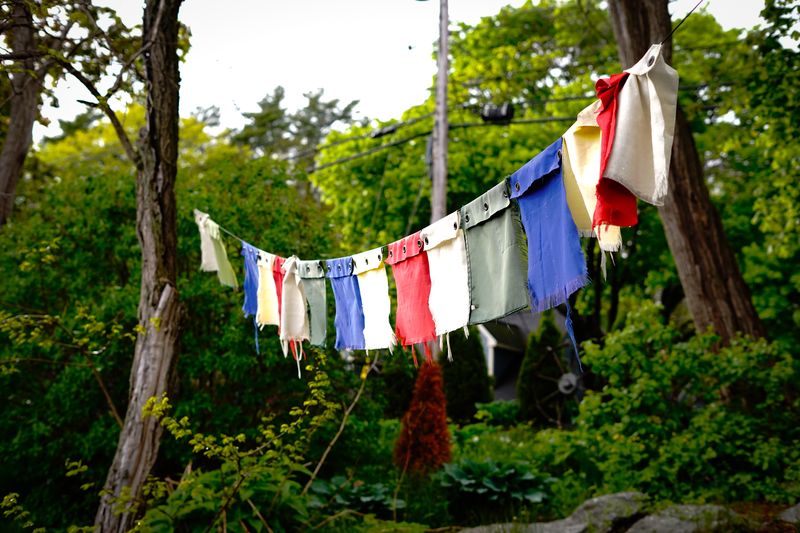
Later, in a garden a few blocks from the water, a string of hand-dyed prayer flags caught the wind between two trees. Nothing about it was a planned stop. I noticed the color against the green and stopped for less than a minute to get the shot. Those unplanned minutes are usually where the most specific, least generic images in a travel set come from.
Shooting the Food
You cannot leave Maine without photographing a lobster roll, and it deserves better treatment than a flat top-down phone shot. I shot mine at an angle, close enough that the lettuce, bread, and lobster meat all read with real texture, with the harbor colors from the tray and the paper bag behind it doing the work of grounding the shot in its setting instead of looking like a studio product photo.

Side light beats overhead light for almost any food shot. Position yourself so the sun or window light rakes across the plate from the side rather than straight down, and you get shadow and highlight that describe texture instead of flattening it. This is the same principle I use lighting a portrait, just scaled down to a picnic table.
What a Coastal Trip Teaches You
Charleston photography is defined by warm, even light and slow water. Maine gave me overcast skies, hard cold light off the water, and a much narrower window before conditions changed completely. Working in that harder light forced me to rely more on composition and less on the light doing the work for me, which is a muscle worth exercising regularly.
The other lesson was pacing. Maine does not offer one obvious hero image the way some cities hand you an unmistakable landmark. It rewards slowing down and noticing: a painter at an easel, flags in a tree, one boat instead of the whole harbor. That same instinct, noticing the specific detail instead of reaching for the obvious wide shot, is what separates a generic gallery from one that actually feels like the place. I brought that instinct home with me, the same way an Arizona desert trip and a Chicago city trip each sharpened a different part of the same eye.
Frequently Asked Questions
What is the best lighthouse to photograph in Maine?
Portland Head Light in Cape Elizabeth is the most photographed lighthouse in Maine and for good reason. The white tower, red-roofed keeper's house, and rocky shoreline give you a strong composition from almost any angle, and Fort Williams Park around it offers cliffside trails for wider shots. Go early or late in the day to avoid the crowds that build up around the fence line during peak hours.
How do you photograph a working harbor without it looking cluttered?
Pick one boat or one line as your anchor subject and let the rest of the harbor become supporting texture rather than trying to capture everything in frame. A name on a transom, a flag, or a patch of reflected color gives the eye somewhere to land first. Shooting from water level on a dock rather than from above also compresses the scene and makes the clutter read as atmosphere instead of noise.
What food photography works for a Maine coastal trip?
Lobster rolls, chowder, and anything served in a paper tray on a picnic table photograph best with natural side light rather than an overhead flash. Get close enough that texture reads clearly, keep the background soft, and include a hint of the setting, like a blue tray or a waterfront view, so the shot feels like a place rather than a studio product photo.
How does travel photography help you grow as a photographer?
Travel photography forces you out of familiar locations and lighting conditions. You adapt to new environments quickly, find compositions in unfamiliar places, and work with whatever light and weather you are given instead of a scouted setup. It builds versatility, expands your portfolio, and keeps your eye for a scene sharp.
Book a Portrait or Location Session
I shoot portrait and event sessions in Charleston and the DMV, and I bring the same eye for light and composition to every coastline, familiar or not. Check out my portfolio to see the range of my work, or book a session.
If you are in the DC, Maryland, or Virginia area, visit my DMV portrait photographer page for packages and availability. Travel sessions are available by request for locations well beyond Charleston and the DMV.